
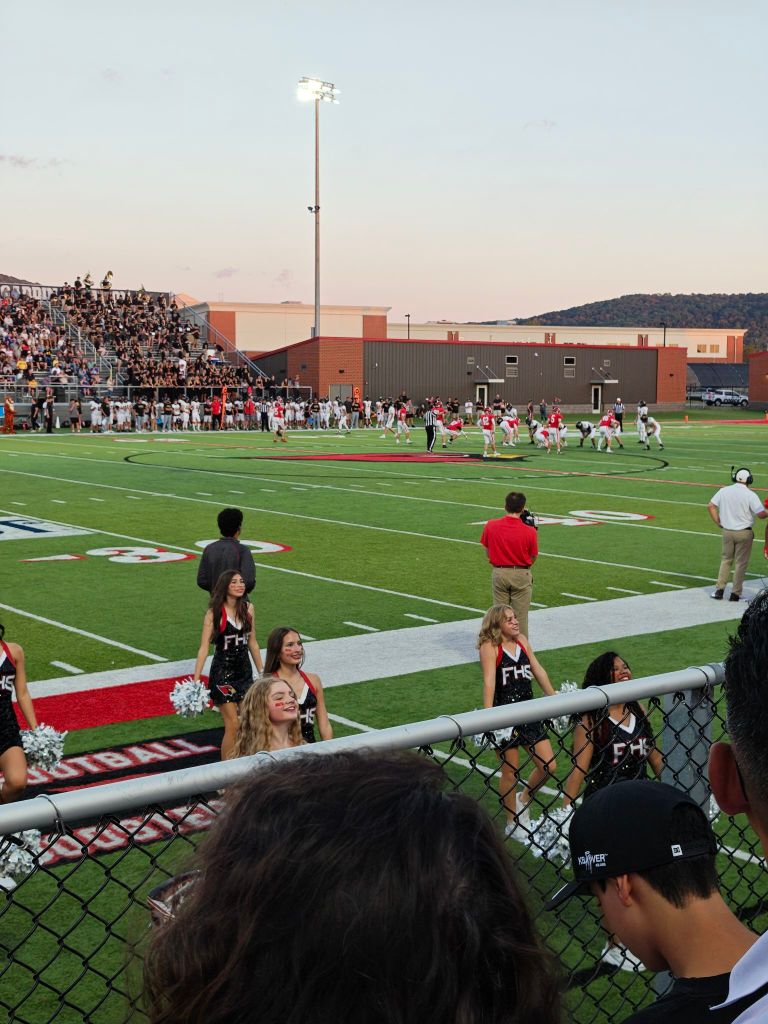
I am here to support my son and his team on a beautiful fall evening. It feels almost surreal that nearly a year ago today, I could sit in these stands without trembling. Back then, I could feel the thud of the players’ feet, the sway of the bleachers, the contagious energy of youth—and still breathe without flinching.
I didn’t know then how sacred that internal calm had been. Back then, I just stayed somewhat numb to avoid the pain.
Now, every sound has a sharp edge. Every rhythm has a painful point my body still doesn’t know how to process it. The air hums with a tension that is somewhat unexplainable. A child keeps blowing a moose horn. I am sure they probably mean for it to distract the other team. Unfortunately for me, each blast feels like it’s aimed straight at my nervous system.
The Farmington High School Cardinals’ home field glows under the Friday night lights. In celebration of every touchdown, fireworks split the dark Ozark sky. They’re breathtaking against the untouched hills that form the backdrop of the stadium. The gentle rolling hills, full of natural beauty, still hide the stadium from the glare of city lights.
Yet for me, every explosion feels like an assault on my senses.
Gabe is a junior and not the starter. This is okay, because time moves like the blink of an eye. This is his last season as the low man on the totem pole. A place almost every adult who has played a sport remembers. With eight minutes left in the second quarter, our team is winning.
It is one of those moments when, as a parent, you find yourself hoping: Maybe he’ll get a chance to play but also realizing that this is someone else’s last season to shine.
After COVID, he found his love for football. When he was little, his autism made sports hard. We tried soccer and baseball. Instead of watching the batter, he would pick flowers in the outfield. Instead of kicking the soccer ball, he would follow the butterfly and go the other way.
So for him to thrive in football last year was incredible. I got to watch him come alive on the field. I got to watch my son find something that lit him up.
That was the first fall after the assault. I was already hypervigilant, but I could still gently calm myself enough to enjoy the energy of the crowd.
Then my employer force-transferred me into a confined, dark, cold closet.
After that, I developed a new kind of fear: agoraphobia.
Now I hear everything.
Every whisper. Every scrape. Every creak.
My ears became too alive, my body too aware. Even now, the faintest sound—a water bottle crinkling, a pen clicking—can feel like a warning:
Danger is near.
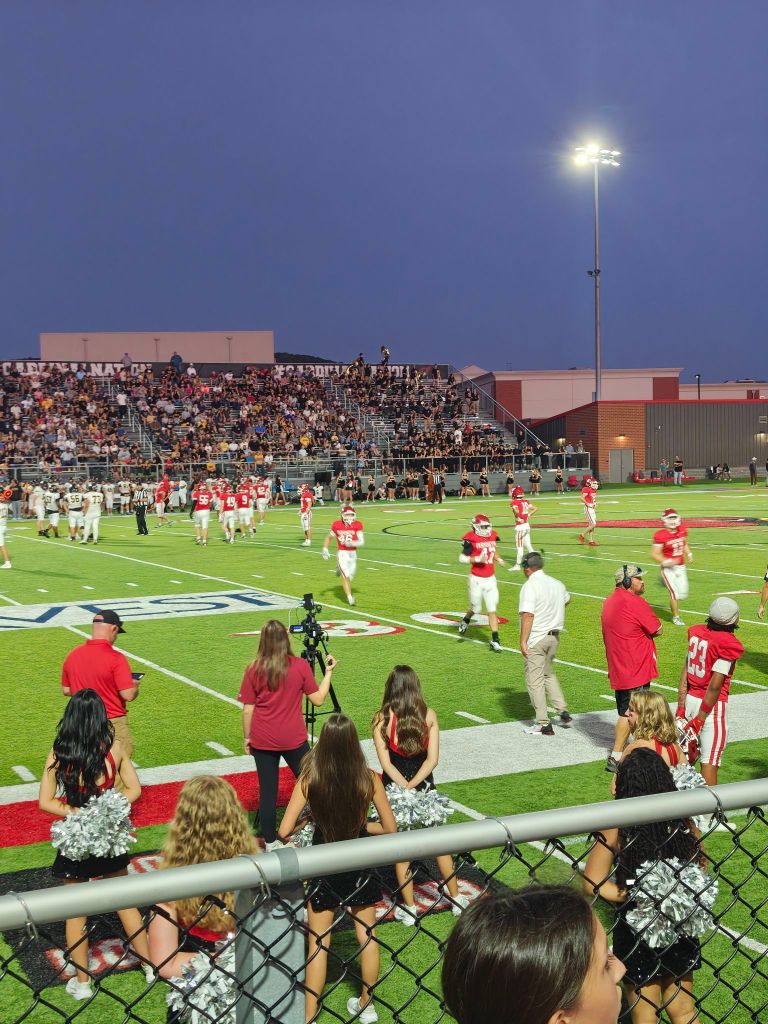
Every touchdown brings another firework, another surge of beauty and panic intertwined. I watch colors bloom across the dark horizon, and I flinch anyway. The crowd cheers, and then the announcer plays “Kickstart My Heart.”
That song came out when I was in high school—when the world still felt wide open and loud in a good way. Hearing it now makes time fold in on itself, my youth and my son’s overlapping in the glow of the Friday night lights. In my mind, I can almost see the girl I was in those stands, laughing and carefree, unaware of what life would take and what it would teach.
The song’s the same, but I’m not.
Now it hits differently much louder somehow, as if it’s reminding me that my son is growing up inside the same rhythm that once carried me, and I’m fighting to stay steady enough to witness it.
My heart won’t stop. My mind won’t stop.
It feels like fighting a mental battle with the cancer of my memories—something that grows inside me without permission, spreading through nerves and thoughts alike. Surviving it feels like chemotherapy for the soul: exhausting, brutal, but necessary if I ever want to live again.
I look out onto the field and notice a girl with green cat-ear headphones snapping pictures of the team. I assume they are for the yearbook. Even though her ears are adorably covered, I notice that she, too, flinches when the fireworks burst.
I wonder if maybe she understands, or maybe she’s simply doing her job. Somehow, the reason doesn’t matter. Noticing her reaction steadies me. It reminds me that I may not be the only one enduring the noise in order to capture something that matters.
When the crowd gets too loud, I retreat to the concession stand and then find myself slipping beneath the bleachers to hide my tears from the world.
I know I am here because I love my son. I also refuse to let fear win.
Mind you, I know every part of me wants to go home. But I choose to stay, even while trembling, breathing too fast, and sick to my stomach. I remind myself that this moment matters.
Fighting through it matters.
Making moments become larger than pain matters.
I know trauma isn’t invisible; it’s physical. The symptoms I experience live in my bones, my pulse, in the way every nerve hums with false alarms. I carry it like a chronic illness—the cancer of memory that threatens to consume what’s left of my peace.
But I keep fighting, even if survival looks nothing like healing.
Tonight, I’m not whole. I’m not calm.
But I’m here.
I’m showing up in a place that once felt safe, even though it still hurts to inhabit. That, for now, is enough.
And as I look around, I wonder how many others are missing these moments.
It is not because they don’t care or because they don’t love deeply. I can promise you that is definitely not the case. The reason is much more complicated. Trauma or anxiety is stealing their sense of safety.
Maybe they’re sitting in parked cars outside stadiums or in dark rooms at home, wishing they could be there but unable to bear the noise from the internal alarm system trauma created.
One can only hope that maybe one day showing up won’t feel like survival for anyone who is suffering. Maybe one day the sun will set on our pain long enough for the celebration to feel like living.
Healing must be conducted personally, but suffering should never have to be.
I want others to know they are truly not sitting in the stands alone.
I am right there next to you.
Let’s move toward healing together.
 Becoming Unboxed