The Art of Healing: Living with Trauma and CPTSD

For Whoever Needs This

If you are reading this because something inside you hurts, I want you to know something.

Maybe the noise won’t stop. Maybe the memories won’t fade. Maybe you are tired of pretending to be okay.

This was not your fault.

You did not deserve it.

And struggling does not make you weak. It means your body fought to keep you alive.

There may not be one cure, one medication, or one answer for all of us. But there is one truth I have learned again and again:

You deserve to be heard long before you feel healed.

If you feel like you’re running a marathon in quicksand, if even the smallest sound makes your heart brace for danger, if you’re afraid that no one will stay beside you when it gets hard, I understand that more than I can ever explain.

Maybe no one can fix you.

Maybe fixing was never the goal.

But please take this with you:

Strength is not never sinking. Strength is refusing to stay buried.

Your voice matters.

Your pain matters.

Your tomorrow matters, even if today hurts.

If nothing else, let these words be proof:

You are not invisible.

I see you.

And I believe you can make it through.


For the Friends and Family of Someone Who Suffers

If you love someone who lives with trauma, you may sometimes feel unsure what to do or be afraid of saying the wrong thing.

You might see them cry without warning.

Pull away when they actually need closeness.

Lash out when they are really just scared.

You may take it personally. You may feel helpless. You may even feel tired too.

Please know this:

They are not choosing their pain.

Their nervous system is reacting for them long before their logic even has a chance to even process the situation.

They are not trying to be difficult.

They are trying to survive.

You don’t need the perfect words.

You don’t need to fix it.

You don’t need all the answers.

Sometimes all they need is:

“I’m here.”

“I don’t fully understand, but I want to support you.”

“You don’t have to carry this alone right now.”

Sometimes the most powerful thing you can do is stay without trying to change them.

Because it’s not about rescuing them.

It’s about not abandoning them while they’re learning how to rescue themselves.

Even with good intentions, some phrases may cause harm:

“You just need to calm down.”

“Can’t you get over it by now?”

“But that happened years ago.”

“You’re too sensitive.”

“Other people have it worse.”

It may seem logical, but trauma doesn’t respond to logic.

It responds to safety.

To compassion.

To patience.

They are not broken.

They are rebuilding.

And they are still learning how to live in a body that remembers what they wish it could forget.

You may never fully understand what they carry. But if you can choose to walk beside them anyway, even when it’s messy, you will give them something that medicine never could:

Proof that they are still worthy of love and care.

That kind of presence is not weakness.

That is courage.

That is love.

And sometimes, that is what helps a survivor make it to tomorrow.


Part I: What CPTSD Really Is

All the years of abuse. All the traumatic instances. All the ways I had to survive financially, physically, mentally, spiritually, and in relationships.

I always had someone to lean on.

A therapist.

A lifeline.

Someone who could remind me that I was still here.

But the funny irony is this:

The week before it happened, the last time, the one I swore would never happen again, my therapist and I had just spoken.

We talked about how far I had come.

The night of the assault, I called her. I needed her, I knew I was not okay.

She said, “Oh my God, Melissa. You had come so far. You can get through this. You’re strong enough.”

I didn’t want pity.

I didn’t want advice.

I just needed someone to hear me.

As the weeks went on, it was my voice, not her answers, that saved my life.

Just telling someone, anyone, was enough to keep me from the unspeakable end of my existence.

They didn’t need to hear every detail.

They just needed to listen.

But ironically, that also became my downfall.

It was my voice that made someone uncomfortable.

It was my voice that triggered a complaint.

It was my voice they said talked about sex too much.

It was my voice that shattered the silence they depended on.

And my voice, once again, brought back the ugly history of my supervisor, somebody who had already tried to take my worth from me.

That is another chapter.

The nuclear bomb.

The one I haven’t fully written yet.

But when I was diagnosed with Complex Post-Traumatic Stress Disorder, everything suddenly made more sense.

And hurt more deeply.

We hear PTSD and we think of soldiers. The ones who come home from war and fear loud noises, sudden movement, fireworks in July.

We think of police officers and firefighters. People who see one horrific moment they can’t forget.

But some of us didn’t witness one moment.

We lived it on a constant basis.

We weren’t on a battlefield.

We were the battlefield.

That’s what people don’t understand about someone like me.

CPTSD is what happens when survival becomes your identity.

It’s when the people who were supposed to keep you safe became the reason you question if you deserve safety at all.

Here is what my war looked like:

A childhood with no positive reflection. No one to say, you’re good just as you are.

The loss of a father at six years old.

A mother who tried, but carried her own storms. Was a widow at 25 with a six year old and 3 year old who suddenly had to become all the things it takes to raise children, keep a house and do it all alone.

The joke about my first kiss that shattered my sense of worth.

A teenage boy who took advantage of my innocence.

Domestic violence wrapped up as love from boyfriends.

Black eyes.

Concussions.

A choice no woman should ever have to make about her own body.

A custody battle to protect my child.

A medical fight to save my daughter life from Type 1 diabetes every single day.

A marriage where I became the protector, the provider, the one who held everything together.

And finally, the detonator.

Sexual assault and entrapment.

And that became the breaking point, creating the flame and  the point of no return.

Followed with discrimination for being a victim by a state agency that exists to protect people like me.

That was the moment the war inside me finally said:

ENOUGH!!!!!


Part II: The Search for Relief

Once you obtain a diagnosis, you begin the next battle:

Trying to find anything that will ease the pain.

You bring the diagnosis to doctors.

To psychiatrists.

You hope that naming it will help fix it.

But naming it is only the beginning.

I was never formally 5150’d or institutionalized, but I’m not going to lie.

There were days when the thought crept in.

Days when I spoke to the professionals who cared for me and said:

“I don’t know how much longer I can keep going like this.”

You find good providers.

You try to find people who care.

You try every medication.

You go through the giant list of antidepressants, every pill that promises relief.

But nothing touches the pain in your mind.

Nothing eases the ache in your bones.

Nothing makes you feel like you again.

When you are deep in the throes of Complex PTSD, you start to forget who “you” even is.

And when you’re also ADHD, your PTSD becomes like the Incredible Hulk climbing the stairs of your nervous system.

You see your psychiatrist every month.

You try one drug after the other.

And at some point, you realize that they know something too.

You may never fully get better.

Not because you don’t want to, but because something new keeps being thrown at you before your body ever gets the chance to heal what came before.

You call hotlines.

You call 988.

You call your advocates at the Rape Crisis Center.

Your friends try.

God knows they try.

But after a while, you start to feel like a burden.

You try to explain it to your family when it’s Christmas.

But something as simple as a normal conversation sends your mind into a tailspin where the only thing that keeps you grounded is lining up colored tiles on a phone screen.

Because if you don’t, you might scream.

And everyone might finally see the demon that trauma and CPTSD has carved into your nervous system.


Part III: When the Treatments Aren’t Enough

When the diagnosis comes, you expect some kind of relief.

But sometimes the diagnosis just opens a door, and behind that door is another kind of exhaustion.

You try ketamine.

You get prescribed rounds of Transcranial Magnetic Stimulation.

Thirty-eight visits.

Nearly thirty-eight days in a row.

Because maybe, just maybe, it will help you breathe again.

The medications don’t work.

Sleep disappears.

And it doesn’t make you weaker, but it makes it impossible to recognize yourself.

In my case, I learned something important:

I didn’t just have trauma.

My trauma got worse after I was discriminated against for being a trauma survivor.

That’s when the closet came.

That’s when I was boxed in a storage room nine hours a day, listening to noise after noise, conversation after conversation, wondering how no one could see I was drowning right in front of them.

I wanted to scream:

Can’t you see me?

Can’t you hear me?

Can’t you feel my pain?

Didn’t you see me vomit in the parking lot?

Didn’t you see the look on my face when I begged to be heard?

But when you have Complex PTSD, you learn something.

No medication stops your mind from convincing itself that it is still in danger.

In my case, even the hum of an aquarium feels like a threat.

A fan running can take away my sleep.

I don’t rest.

I brace.

I don’t hear sound.

I hear warning.

And if anyone were to ask me, how did you survive this?

I would tell them the truth:

My only other option was six feet deep.

That’s the reality no one talks about.

Trauma healing is not a sprint.

It’s a marathon.

And when you have CPTSD, it’s a marathon through quicksand.

What I want the world to understand is this:

I don’t need to be babied.

I don’t need to be treated as fragile.

I just need compassion instead of judgment.

Someone to say:

“I see you. I don’t know what you’re going through. But I care about you.”

It took two years for my family to begin to understand.

My own mother once said, “You need to get over this PTSD shit.”

And then, at a football game, I watched her yell at children for blowing a horn because she knew I couldn’t handle the sound.

Even my ex-husband stepped in one day and said:

“Someone hurt her really badly. Could you please be careful? That’s PTSD.”

It’s not that I need protection.

But someone did hurt me.

The psychiatrist tried.

The medication failed.

And ultimately, it was my voice, my art, and my truth that kept me from disappearing.

Because once the detonator goes off, you will never again be the same person you were before it.

But if you face it, if you use whatever healing you can find, you might come out stronger than you ever were before.

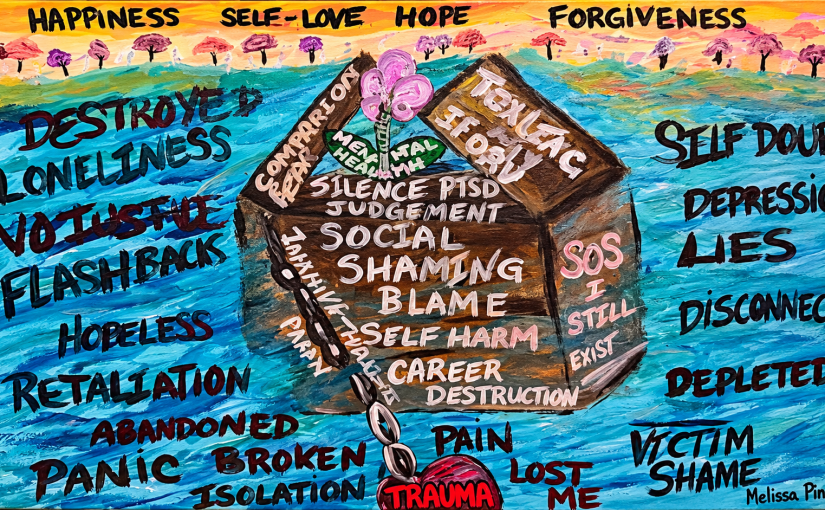
For me, that healing is art.

It is speaking my truth.

It is becoming unboxed.


Part IV: What Strength Really Is

There is no one thing that can fix us all.

No single cure.

No magic word.

No miracle pill.

But there is one thing I have learned, and it might be the only universal truth trauma survivors share:

It was not our fault.

We did not deserve this.

We deserve to be heard.

We did not deserve to be hurt by someone else.

And it is okay to not be okay.

Sometimes daily.

I didn’t get through this alone.

I had medical providers who begged five times for accommodations from the employer who discriminated against me.

They cried with me.

They stood beside me at art exhibits.

They watched me get angry with them and still came back.

That is support.

And sometimes the hardest part is not facing your trauma.

It is apologizing to your children for the moments you lashed out.

Not because you were angry at them, but because the world had been cruel to you and your body didn’t know where else to release the pain.

That is the hardest thing to admit:

This wasn’t their fault either.

So I take it one day at a time.

Sometimes one moment at a time.

Tomorrow I might not be okay.

That doesn’t mean today was a failure.

I cry daily over the tricks my mind plays on me.

Over the feeling that I have lost everyone who once cared.

But there is one thing I hold onto:

The change I make for myself because of what happened to me might become the reason someone else chooses to live.

Maybe that is all I can do.

Maybe that is enough.

People say “you are not alone,” but that is not always true.

Very few people will sit in the quicksand with you and hold your hand while you try to breathe.

But strength isn’t about never sinking.

It’s about refusing to stay buried.

And if I keep using my voice, maybe someone, somewhere, will keep using theirs too.

That is the art of healing.

That is becoming unboxed.
The Scream They Never Heard

I want to scream.

I want to yell.

I want to curse at the people who hurt me.

I want to physically fight back in the way that, mentally, I can’t.

I want to look those who tormented me straight in the eye and say:

How could you do this to me?

I am hurting and in shock.

Frustrated.

Mentally collapsing.

And angry, oh so very angry.

I don’t mean the kind of anger that comes and goes.

I mean the kind of anger that hides under your skin.

The kind hidden beneath the outward professionalism, the polite emails, and the carefully chosen words.

Underneath every please and thank you I typed to those responsible who tried so hard to make me invisible.

Underneath every morning that required every ounce of strength I had just to show up and walk back through those doors.

I walked into work every morning as the victim of a sexual assault that had occurred during my lunch break—during my workday.

And there was the irony of walking into a public health facility, a center charged with protecting woman’s health and offering them support at some of life’s most vulnerable moments.

Think about that contradiction for a minute.

I worked for an agency connected to resources for domestic violence, human trafficking, mental health crises and suicide prevention—the agency responsible for answering the 988 crisis line in the state of Arkansas.

988.

The number you are told to call when you feel like you have nothing left to live for.

And I worked there.

I walked through the employee entrance barely able to remember who I was.

Maybe I simply wasn’t as important because I was an employee.

It felt as though employee health and comfort didn’t matter at least not mine.

All I was expected to do was get the job done and leave.

I still had a computer.

I could still type.

I could still answer emails.

I could still say good morning.

Sometimes I could even make my voice sound normal.

They thought because I showed up I must have been okay.

Or maybe it was because I wouldn’t leave maybe that was the true issue.

But I  was NOT okay!!

There were times I could barely remember my own name, let alone remember how to care for myself.

How do you explain that?

How do you explain being a grown woman who had spent decades working, raising children, solving problems, paying bills, fixing houses, caring for every other person and handling whatever life threw at her and then suddenly having to fight to remember things that used to happen automatically?

Eat.

Shower.

Pay the bill.

Find the keys.

Answer the message.

Remember what day it is.

Remember why you walked into the room.

Remember the sentence you were trying to finish.

Remember who you were before all of this happened.

My brain couldn’t manage a life anymore.

It could only manage surviving minutes at a time.

Yet somehow, I still kept showing up.

Maybe that was the part that fooled everyone.

But my  medical team help me tried to get help.

Even when complete mental collapse felt all but imminent, all five tried.

I saw my psychiatrist every month.

I went to two different therapists every week.

I saw my chiropractor weekly, and even my chiropractor wanted to help with accommodation paperwork because he could see what was happening to me.

My general practitioner tried.

My endocrinologist tried.

My therapists tried.

My psychiatrist tried.

I had five different medical professionals submit requests for ADA accommodations on my behalf.

They could see something was terribly wrong.

And it wasn’t only medical professionals.

I could tell an ordinary person what had happened without giving them graphic details.

I didn’t have to describe the deer blind.

I didn’t have to describe what happened to my body.

I could simply say:

I was sexually assaulted during my lunch break.

Afterward, I was moved from the work I had send almost half my life conducting, then moved again, and eventually I spent nine months working in a windowless room while trying to get help for what was happening to me.

Their faces would change.

Oh my God.

I am so sorry.

It was almost instinctual—the empathetic side of a stranger.

A human being hears that another human being was hurt.

A human being responds with compassion, empathy and concern.

It isn’t complicated.

They didn’t need medical records to believe me.

They didn’t need lawyers or discovery to prove to them what had happened.

They didn’t need an accommodation committee.

They didn’t need to understand Complex PTSD.

They didn’t need every detail.

They simply needed to listen long enough to hear my pain and suffering and understand:

Something terrible happened to her.

Normal human empathy.

That was the thing that seemed to be withheld from me.

Now mind you, I didn’t stay silent.

I wrote state representatives.

I wrote legislators.

I wrote to the Governor’s office.

I filed Equal Opportunity charges.

I hired lawyers.

My medical providers sent letters and filled out forms.

My therapists asked questions.

My attorney asked questions.

I asked questions.

I asked the Arkansas ACLU.

I reached out to disability organizations.

I begged.

I pleaded.

Everybody seemed to be asking questions.

And yet what reached me almost every time seemed to be the exact same thing:

Silence.

Or what seemed to be the same nonexistent answer.

Don’t talk about that.

Be quiet.

Move on.

Almost every accommodation request seemed to arrive at the same conclusion.

There were discussions about whether I would be put back somewhere.

About whether working from home might continue for a very long time.

About what would happen to me.

There seemed to be endless discussion about me.

But one question felt painfully absent:

What do you think would help you?

What environment would allow you to function?

What would make you feel safe enough to concentrate?

What do you think an accommodation looks like?

I didn’t expect to get everything I wanted.

But I should have had a seat at the table and the option to look through the menu.

I wanted to participate in the conversation about my own survival.

Instead, other people were deciding.

Other people determining where I should be.

Other people determining what should happen next.

Other people deciding what was best for me.

Other people talking about my body, my work, my future and my trauma while I was struggling to hear my own voice.

It was a feeling that was painfully familiar.

Again, after two men had used my body without listening to my voice repeatedly say:

No.

A lifetime of other people telling me what they wanted.

What my body should do for them.

What I should tolerate.

Who I should be.

Where I should go.

What I should accept.

What was best for me.

It became the relative movie role the narrative I had heard all too often throughout my life:

Be obedient.

Don’t stand up.

You are weak.

You don’t matter.

And the message from my employer felt painfully familiar.

Different circumstances. Different people. Different actions.

But once again, other people were determining what would happen to me while my own voice seemed to matter the least.

Except this time the damage became so severe that the numbing darkness grew louder than everything else.

Eventually, my own voice became almost impossible to hear.

The effects began showing themselves in symptoms and medically supported diagnoses.

Then there were days inside that windowless room my employer put me in when my mind became so desperate to understand what prolonged powerlessness was doing to me that I asked myself a question I had almost been afraid to admit:

Is this what a concentration camp was like?

I knew my experience was not equivalent to the imprisonment, torture, starvation, murder and atrocities endured by victims of concentration camps.

That wasn’t the comparison I was trying to make.

I was trying to somehow rationalize what it felt like to be psychologically captive—to feel trapped inside circumstances I could not control, constantly asking for help while feeling as though no one was listening.

My mind was searching desperately for language large enough to understand what prolonged powerlessness was doing to it.

What happens to a human being when she feels powerless for long enough?

What happens when choice begins disappearing?

What happens when dignity and worth are forced?

What happens when your world becomes smaller and smaller until you no longer feel like a person moving through life, but something being contained and managed?

I didn’t have language big enough to express it or fight off the growing darkness.

The word stress wasn’t big enough.

No, anxiety wasn’t big enough.

No, depression wasn’t big enough.

Sometimes even the word trauma didn’t feel big enough.

I felt dehumanized.

I felt managed.

I felt as though something fundamental had been taken from me, and I could not figure out how to get it back.

And the rage underneath my pain was just as enormous.

Because other people got to go home from their days work.

They could rest.

Recoup.

Recharge themselves.

Eat dinner.

Watch television.

Laugh.

Sleep.

Wake up.

Live.

My mind didn’t get an opportunity. My trauma filled me home. It followed me in every corner of every room 24 hours a day. My nervous system didn’t realize it could rest. It couldn’t stop preparing for another fight.

No matter how hard I fought to get myself back, back to a version I thought I once was,  I basically had to fight and  try to remember how to be a person at all.

How could they do this to me?

How could they watch me deteriorate and still expect me to perform?

How could I tell them I was drowning from the fallout of a violent crime and somehow become the problem because I couldn’t breathe?

How could medical professionals tell them again and again that I needed help, and their response still feel like silence?

I wanted them to look at me.

Really look.

Not as an employee.

Not as a complaint.

Not as an accommodation request.

Not as a problem that needed to be managed.

Me.

LOOK AT ME.

I am one of those people you have policies to save.

I am one of those people you hope will tear a strip of the paper hidden behind the door in the bathroom stall.!

I could barely think.

I could barely sleep.

I could barely take care of myself.

I no longer recognized myself, and you still expected me to act normal?

The worst flashbacks were not always memories of what happened to me in that deer blind or through the employment discrimination.

The worst moments were due to realing  what was happening to my children while I was having a complete mental collapse.

Because the damage didn’t stay at work.

It came home.

The numbing darkness began to swallow my entire family.

Each of my children processed my pain differently during my darkest times.

My daughter had just turned twenty when this began.

As I deteriorated, she became more distant.

Colder.

Almost unable to feel what was happening to me, allowing herself to slowly internalize her own pain alone.

And for a long time, that hurt.

Oh God, it hurt.

Because she had always needed me to be strong.

She had needed me to help her with her health issues, to remember the important things, to be the person who held things together.

But I also knew she needed something I couldn’t give her anymore.

She was surviving it too.

The opposite occurred with my son.

He was thirteen when this began.

He is sixteen now.

He had always been a handful.

A child who could challenge me, frustrate me, exhaust me and make me laugh, sometimes within the same five minutes.

But during those years, he became the child who saw the darkest parts of me over and over again.

He saw my darkness in public settings.

He learned how to read my facial expressions.

He noticed when a room became too much for me and instantly checked whether I needed reassurance or protection.

He heard my speech patterns change.

Which is terribly painful to even acknowledge.

My son became fluent in my childlike dialect.

My mind became metaphorically small.

Something inside my brain had fractured in a way that made the adult part of me harder and harder to reach, and somehow my son learned to interpret what it meant.

My nervous system became so incapable of regulation that the smallest thing would and often did become enormous.

This was the downward spiral of a total internal system collapse.

A noise.

A question.

Something misplaced.

One more demand when my brain had absolutely nothing left to give.

Sometimes I would react like an infant having a tantrum because the adult part of me simply could not reach the controls fast enough to turn down the noise.

I couldn’t sleep.

I couldn’t regulate myself.

I couldn’t control any of my emotions that once would have passed through me without taking over the entire room.

And my son lived inside that with me more than anyone.

Sometimes this caused fits of rage in which I would explode toward anyone within the blast zone because my nervous system was at peak fight-or-flight.

The smallest thing would feel enormous, and once my body crossed that threshold, I could not always reach the part of myself that knew how to calm down before it switch was thrown.

There were times my son would curl himself into a ball and cry because his mother could not calm herself enough to make him feel safe while I screamed with uncontrollable anger.

That memory destroys me the most and cuts deep.

My temper tantrum caused my own child to curl into himself, sobbing with his arms around his knees.

He was supposed to be the child.

Instead, there were moments when he became frighteningly close to a parent to me.

He watched me.

He studied me.

He learned my fear.

He experienced moments when the woman who was supposed to regulate the room could no longer regulate herself.

My daughter protected herself by moving away emotionally.

My son protected me by moving closer and becoming the adult.

Neither of them should have needed a survival strategy for their own mother.

But they did.

People at work saw me continue showing up.

My children saw what came home.

While everyone was debating what I was entitled to at work, my children were paying the price at home.

And eventually something changed inside me.

The fear did not disappear.

The anger did not disappear.

I simply became too exhausted to keep feeling all of it.

Day after day, nothing seemed to get anyone’s attention.

Another letter.

Another provider.

Another question.

Another explanation.

Another attempt to make somebody understand.

And every time hope seemed to appear from behind a darkness, giving just enough light to believe that perhaps this person would finally hear me, it seemed to collapse again.

And again.

And again.

Eventually even hope became exhausting.

And I drifted farther and farther into what I can only describe as:

The oblivion of numbness.

It was a darkness many trauma survivors know.

It isn’t sadness.

It isn’t even fear.

It is something beyond both.

It is what happens when your nervous system has screamed for so long that eventually there is nothing left to scream with.

Feeling becomes too expensive.

All feeling equals pain.

So your body begins shutting the lights off.

You stop crying because crying requires feeling.

You stop getting angry because anger requires energy.

You stop imagining tomorrow because tomorrow requires hope.

You breathe.

You go to work.

You answer the email.

You come home.

You stare at the people you love and intellectually know that you love them while wondering why you cannot reach the feeling that once came so naturally.

That was when the darkness almost controlled it all.

I wasn’t simply disappearing.

Little by little, I already had.

And the darkness had all but gained control.

The darkness didn’t only take away my ability to feel.

It convinced me that I deserved everything that had happened to me.

That may have been the most dangerous part.

Because once I could no longer feel my own worth clearly, everything painful that had ever happened became evidence against me.

Maybe I am the reason.

Maybe every bad decision proves it.

Maybe all these people treated me this way because there is something about me that makes people do this.

If it happened again and again, surely the common denominator must be me.

The darkness collected everything.

Every failed relationship.

Every person I trusted who hurt me.

Every time I stayed too long.

Every time I didn’t leave quickly enough.

Every time I didn’t stand up and demand I be valued.

Every bad decision.

Every mistake.

Every moment when I reacted terribly because I was overwhelmed.

And it whispered:

See? It has to be you.

I could fight everybody else to prove that what happened to me mattered while privately wondering whether I deserved to matter at all.

I could fight relentlessly for myself while not believing in myself.

Those things somehow existed at the same time.

I wrote.

I documented.

I asked.

I begged.

I found doctors.

I found therapists.

I contacted representatives.

I filed charges.

I filed lawsuits.

I kept trying to make someone hear me.

But there was one person I could no longer convince that I really deserved to be heard at all.

Me.

The only voice I could no longer hear was my own.

Even now, my body sometimes reminds me how deep that went.

I can be standing safely in my own yard trying to process all of this when my body begins to shake.

My stomach hurts.

My nervous system reacts before my mind knows what happened.

A squirrel drops a nut in front of me.

I startle.

I turn and yell up at it.

Then I hear myself.

That voice.

Small.

Frightened.

Childlike.

For just a moment I hear the six-year-old I once was, the little girl who had already experienced too much before she ever turned seven.

I am standing in my own yard.

I know where I am.

I know I’m an adult.

I know there is no threat.

I know it was a squirrel dropping a nut.

My mind knows.

My body answers first anyway.

The calendar keeps moving.

My body sometimes doesn’t.

And suddenly I understand again what my children heard.

They heard the child inside their mother before I ever knew she was speaking.

They watched me become frightened by things that made no sense to them.

They watched me struggle to explain my involuntary reactions that did not make sense and was unable to stop.

They saw the person who had spent her entire life taking care of everyone else become someone who sometimes could not figure out how to take care of herself.

And that is hardest thing  to forgive myself for occuring..

Even knowing everything I know and understand now.

Even understanding what trauma can do and how painfully hard healing is

Even understanding what chronic hyperarousal and sleep deprivation were doing to me.

There is still a mother inside me who looks backward and thinks:

You hurt your children.

And the darkness takes that thought and tries to turn it into something larger.

See?

It was always you.

Maybe you deserved all of it.

Maybe everybody was right.

Maybe the reason you can’t hear your own voice is because your voice never mattered.

And that is where I went.

That far.

I didn’t know how I was going to get out.

I didn’t know whether there was an out.

I wasn’t looking for someone to solve my entire life.

I wasn’t asking anyone to erase what happened.

I wasn’t asking my employer to become my therapist.

I needed accommodation.

I needed help.

I needed enough human kindness for someone to recognize that a human being was deteriorating and ask:

What can we do to stop making this worse?

I needed enough room to breathe long enough to hear my own voice again.

But by then, I wasn’t sure I would recognize it if it came back.

This is how far down I went.

That was the darkness.

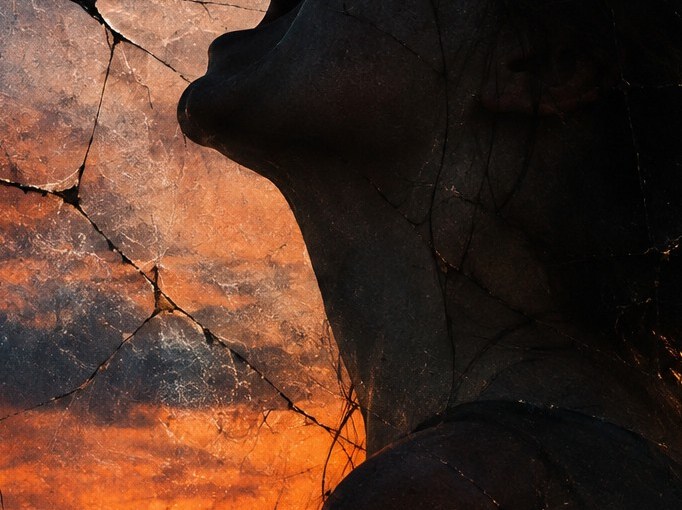
And maybe that is why they never heard my desperate, blood-curdling scream.

Because the loudest scream of my life never came out of my mouth.

At first, it screamed inside me over and over:

How could you do this to me?

Then I became too numb even to scream.

And eventually, underneath everybody else’s voices, everyone else’s decisions, everyone else’s expectations and everyone else’s version of what was best for me—

I can no longer hear my own voice.

Only the weeping of the deeply lost little girl inside me.

The Grain Beneath


So as I was working on an old door today—a vintage door, I’m not sure how old it is, but it looks like it was probably an exterior door with a single pane of glass in the middle—it hit me.

It’s one of those things I bought because I knew I would do something with it someday.
And then everything happened.

Now it has become one more project that sat too long—whether from procrastination, exhaustion, trauma, or simply life getting in the way.
And maybe that’s me too.

I don’t feel very yellow brick road right now.

And the sad part is, I had so many good words in me today.

Most people look at things as disposable. At least in today’s world, that’s what it feels like anyway.

There are a lot of people who would ask themselves, what’s the point in fighting for something that has three layers of paint on it when it would be easier to simply replace it?

Maybe that’s part of why I see the world with rose-colored glasses.

But I guess the thing people misunderstand about rose-colored glasses is that it doesn’t mean you think everything is always beautiful.

Sometimes it simply means you can still see beauty in something after it has been neglected.

Because that door has a story.
Just like any of us do.

Whether it’s a person or a thing, from the moment we are born—or built—everything begins to shape us into what we become.

As I worked on this door, I used two containers of paint remover. The battery kept dying on my electric sander. The sandpaper was too fine and couldn’t get down into the deeper grooves.

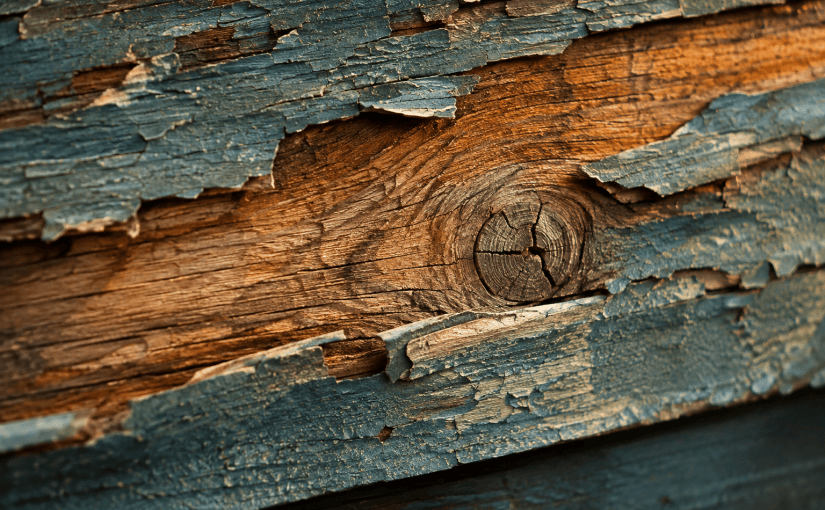
And the weathered side of that door—the side that had taken the beating—held onto that paint like it had fused into its DNA.

No matter how much stripper I put on it, that paint was ingrained.

At least the top layer was easily removable, and didn’t put up a fight. That of course was just the visible superficial layer, that layer that the world sees without having to dig too deep or as too many questions.

And somewhere in the middle of removing the visual easy superficial paint, I started to see myself.

There were layers and layers of difficult, complicated things that had attached themselves to me over time.

Things that harmed me.

Things that changed the way I move through the world.

Things my own mind still struggles to fully comprehend sometimes.

And over time, it made me feel weathered too.

Worn.

Like life had sat on me a little too long.

And I guess I began to realize that the final layer—that deep-seated, rooted, hard-to-remove layer of paint—was the part of me that feels like the trauma of the last couple of years.

Because the more I worked on that door, the more I could see the beauty underneath it.

The grain.

The movement.

The oak waving through in places where the paint finally gave up.

And what struck me was that those lines weren’t man-made.

They were created by nature.

They were the backbone of that door.

Its original structure.

Its truth.

At one point, it was a living thing until it was cut down and turned into something meant to become useful—maybe even beautiful—to someone else.

And that made me think about how healing from complex post-traumatic stress disorder—complex PTSD—is not simple.

Complex PTSD can develop through repeated or prolonged trauma, where painful experiences layer themselves into the mind and body over time.

It is not one event.

It is not one wound.

It is not one memory.

Every layer you remove exposes another layer underneath it.

And just like I fought to get the paint off that door, I fight to understand what caused all of it underneath me.

Why I react the way I do.

Why certain things still live in my body.

Why some pain is surface-level and some pain feels like it has soaked so far in that you don’t know if it can ever fully be stripped away.

Now the average human—and I don’t say that with disrespect—would say enough is enough.
They would have thrown the door away.

I fought with that door for five days, and I’m still not done.
And it still needs repair.

But then again…
I’d say that about me too.
And maybe that’s the point.

Maybe the point isn’t that it should have been easy.

Maybe the point isn’t whether it would be cheaper, faster, or more practical to replace it.

Maybe the point is that some things still deserve to be saved.

Not because they are perfect.

Not because they are convenient.

Not because they haven’t been damaged.

But because underneath all the layers, there is still something solid there.

Still something real.

Still something worth bringing back to life.

As I continued to sand the door, I noticed something else.

The layers of damage were deepest in the most delicate parts of it—the places with the most detail, the places that had the most exposure to the harshness of the world.

And I realized I had come to a crossroads:

Do I repair it until it looks like new?

Or do I sand it and allow the finished product to still carry evidence of what time and neglect had done?

That question hit me harder than I expected.

Because I realized that in me, too, every layer exposed through this journey has left jagged places and missing pieces—things a Band-Aid could never simply cover.

As I looked at that door, I saw the pitted sections.

The softened places.

The rotten wounds.

And I realized that with grace, time, and just the right amount of pressure, even damaged things can still become something.

I think my complex PTSD was shaped, in part, by all the years I never allowed myself the time to heal.

I always rushed.

I, like that door, spent so much of my life shielding others from the harsh elements that I never stopped long enough to deal with what all of it was doing to me.

I tried too fast and too hard to get over things.

To be fine.
To function.
To keep going.

They are there as proof.

To pretend the weather had not reached all the way in.


But this time, just like that door—the one that had been discarded as useless, too far gone, too much of a burden to repair—I finally see something different.

The scars are not proof that it is ruined.

They are evidence that it made it through the storm.

I also realized, while working on that door, that some of the wood had been too weathered to survive.

As I sanded, parts of the rotted edges came away.

And that made me think about something I had not fully put into words before:

Was the goal to make it look new again?

To repair it so completely that someone else would never know the original damage had ever occurred?

At first, that feels like the right answer.

But the more I thought about it, the more I realized that doing that would also remove the real story.

The real truth.

Because nothing once damaged is ever truly new again.

And maybe that is not failure.
Maybe that is simply reality.

Maybe beauty was never supposed to come from pretending the storm never happened.

Maybe beauty comes from surviving it.

Not by announcing every scar.

Not by turning every wound into an identity.

Not by using pain as a shield of protection the way I once did.
But by understanding that the scars are not there to make me harder.

Proof that I still exist in spite of the harsh elements that once tried to wear me down.
And maybe the most sacred realization of all is this:

That on the inside, the softer parts of me—

the healthy parts,

the loving parts,

the hopeful parts,

the parts that still wanted beauty, connection, gentleness, and peace—
those were the parts worth protecting all along.

Not the armor.

Not the survival mode.

Not the shell.

The softness.

The softness was never a weakness.

It was the part of me that survived.

And maybe healing is not about pretending the weather never touched you.

Maybe it’s about stripping away what was never supposed to stay on you in the first place.

Maybe it’s about realizing that the deepest parts of who you are were never the damage.

They were always the grain.

They were always the oak.

They were always the part that remained after everything else started coming off.

And maybe that’s why I keep fighting with old doors.

Maybe that’s why I keep fighting with myself.

Because somewhere underneath the exhaustion, the fear, the anger, the grief, the years of surviving, the shutting down, the hypervigilance, the overthinking, the numbness, and the scars…

I know there is still something beautiful under there.

Not untouched.

Not unbroken.

But beautiful all the same.
And maybe the world would call it too much work.

But I don’t.

Because I know what it means to look at something weathered and still see its worth.

And maybe that’s why I keep going.

Because I am not disposable either.

The Way My Mind Remembers :  Trauma, Memory, and the Pain of Healing


People have often asked me how it is that I’m able to remember so many details.


The truth is, I don’t remember quite as well as I once did. A lifetime of incredibly difficult and unusual circumstances, wrapped up in the word trauma, changed the way my mind holds onto things.


Trauma has a way of affecting even someone who once could catalog everything in their mind down to the smallest detail.


That does not make me extraordinarily brilliant.


Quite the contrary.


I learned that much of my ability to remember came from my life circumstances. Somewhere along the way, remembering became one of the most important parts of me.


Maybe it came from what life threw at me.


Maybe it came from something much simpler.


I never wanted to be forgotten.


Maybe that is part of why I learned to remember so much. I remembered the details of people—their words, their faces, the things that mattered to them—because remembering felt important.


If I remembered you, you mattered. And somewhere inside me,  I wanted to know that I mattered enough to be remembered too.


Remembering was also a defense mechanism because I never wanted to allow myself to become trapped, questioned, or ridiculed in a harmful situation again.


It is hard to explain what it feels like to have a mind shaped by trauma while trying to work through it, heal from it, and explain to others how deeply life’s experiences can become ingrained—so deeply that they are physically felt too.


I can often remember the sounds from an event—the flashes of light, the temperature—before I remember the words in the conversation.


I can remember the feeling in my chest before I remember the words someone spoke to me.


I can remember how the light shined.


I can remember their faces as they walked out of the room.


And sometimes I can still almost see the silence—the cold shoulder, the lack of empathy or care, the way someone can throw silence at you.


Maybe this is simply one of the skills a trauma survivor develops.


I can remember the weight of each moment as though my nervous system were keeping its own journal, a record of both positive and negative memories.


Other people may be able to remember joy simply as happiness. I often feel as though I remember all of it—the joy, the fear, the atmosphere, the weight of the moment—as though my nervous system is always keeping score because it never completely rests.


Maybe that is because I don’t simply remember what happened.

I experience it over and over again.


There is another part that has always been difficult to explain, and sometimes it can make you feel incredibly alone.

What can feel like a trauma survivor’s superpower is the nervous system’s ability to brace and sense, with every fiber of your being, the potential danger that may be around you.


Is that why, when I see memories, it feels as though I’m watching a movie from the outside?

Watching every scene of that memory, whether it is positive or negative?


Is that why I need to remember the whole thing?


But remembering everything is painful—the bad and the good.


Maybe that is part of why surviving trauma can feel so lonely. Life itself can become a painful, constantly on-guard experience.


It is hard to explain how you can see yourself standing somewhere and know what is about to happen. As you watch every moment unfolding in the past, you wish you could reach through the screen of your mind and change the ending.


I can’t.


No one who has survived incredibly difficult and complicated circumstances, all wrapped up in the word trauma, and made it to the other side can reach backward and change what happened.


Even though every fiber of your being can make it feel as though it is happening again, the movie always plays the same way.


For many years, I wondered if something was wrong with me because my memories felt different.
My descriptions felt deeper.


My words seemed to touch people as I told them the complicated stories of life with a passion that made them want to hear more.


I suppose it is only now that I understand that this is simply the way my mind learned to survive something overwhelmingly painful.


It is through this realization that I have changed the way I look at myself.


I no longer judge myself because a sound makes my heart race or because a memory arrives carrying the same physical sensations it carried the first time around.


I understand now that my body was paying attention even when my mind was desperately trying to survive.


Maybe that is why I remember so much.
My memories were never stored only as stories.
They were stored as sounds.


As sensations.


As images.


As fear.


As silence.


And remembering is painful whether the memory is bad or good.


Maybe this is what defines trauma healing and why it is so painful, because the pain is what stops or stalls the healing process.


So for now, I write these stories not because I could change anything when those things happened, but because I am no longer trapped as the woman inside those scenes.


Now I am also the woman watching—and healing in the process.


My hope is that, as you read these stories, you see yourself not in my incredibly difficult circumstances or trauma, but as the individual trying to change your own scene, grow, and heal outside of the trauma that has defined so much of your life.


Maybe healing is learning that trauma can be part of your story without being the only thing that defines you.