
I spent nearly half my life as a proud public servant. Twenty-six and a half years, to be exact.
How do you explain being a woman who proudly dedicated more than twenty-six years of her life to serving the people of Arkansas, only to find herself fighting the very government she spent her career serving?
How do you explain going from being a confident, respected professional to spending approximately nine months isolated in a windowless room?
How do you explain providing medical documentation, requesting reasonable accommodations, following procedures, and eventually seeking help from the highest office in the state, only to continue feeling unheard?
And perhaps the most important question of all:
Who protects the people who find the courage to speak up?
I used to believe that if I fought hard enough, someone at the top would care. That if the Governor of Arkansas knew what was happening inside the walls of one of her agencies, she would say, “Enough.”
But how would she know?
When an employee repeatedly asks for help, how far do those concerns travel? Who is responsible for ensuring they reach someone with the authority to act?
I didn’t know.
I still don’t know exactly what reached Governor Sarah Huckabee Sanders personally.
What I do know is that I spent more than twenty-six years serving the State of Arkansas, and when I desperately needed someone to help me, I found myself fighting to be heard.
The Woman I Used to Be
I was proud of my work.
I appreciated the citizens I served, the relationships I established, and the taxpayers whose contributions paid my salary.
I believed in the rule of law and doing what was right.
I never assumed doing the right thing would always be easy. I asked questions. I challenged decisions. I wasn’t always the easiest person to agree with.
But I believed that when something wasn’t right, we had a responsibility to fix it.
On December 11, 2023, I experienced a sexual assault during my lunch break.
I reported what happened.
I never could have imagined that the events and decisions that followed would nearly destroy the woman I had spent a lifetime becoming.
I was transferred away from the workplace and county I called home, away from the community I had watched grow and helped serve for decades.
The professional relationships, responsibilities, and identity I had spent years building were suddenly changed.
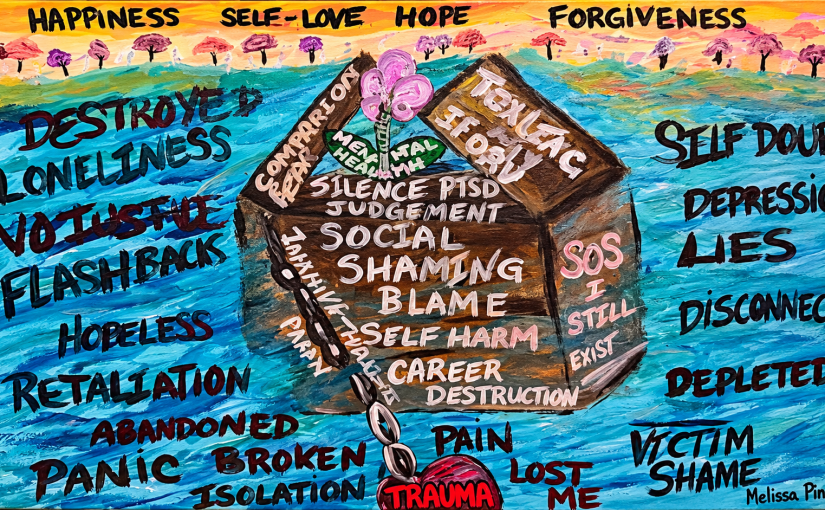
Eventually, I was placed in a small, windowless workspace that I came to call “the box.”
For approximately nine months, there were no windows, no ordinary conversations with coworkers, no stopping by someone’s desk, and none of the everyday human interactions most people never give a second thought.
I was still an employee.
I still had a job to do.
But the physical circumstances of my workplace meant I could no longer interact with the community the way I once had.
Nobody had to explicitly tell me I was forbidden from seeing people.
The arrangement itself prevented those interactions.
Whether complete isolation was the intention or not, I lived with its consequences.
And I began losing the woman I had once been so proud to be.
The Agency That Was Supposed to Protect
There is an irony I have struggled to understand.
The Arkansas Department of Health is an agency whose mission centers on protecting the health and well-being of the people of Arkansas.
It works to protect children, promote public health, and connect people with resources during some of the most vulnerable moments of their lives.
We encourage people experiencing violence to seek help.
We tell people struggling with their mental health that their lives matter.
We promote prevention, intervention, and support.
Yet I was an employee of that very agency, trying desperately to recover from trauma while believing that the circumstances of my employment were making my recovery more difficult.
I provided medical documentation.
I requested accommodations.
I sought extensive treatment.
I followed procedures and continued performing my duties.
All while trying to hold on to the professional identity I had spent decades building.
I couldn’t understand how an agency dedicated to protecting people’s health could leave one of its own employees feeling so unprotected.
I couldn’t understand why the principles we promoted to the public seemed so difficult to find when I needed them myself.
And I couldn’t understand why I had to fight so hard simply to continue working while trying to heal.
A Governor Who Speaks of Families and Mental Health
As a woman and a mother, I have listened to Governor Sarah Huckabee Sanders speak about the importance of families, children, and mental health.
I have watched policies change to provide benefits to mothers that were not available to me when my own children were born.
I am glad that mothers today have opportunities and protections that women before them did not receive.
Progress matters.
But I also know what it feels like to be a mother, a woman, and a longtime public employee whose needs seemed to fall somewhere outside those public commitments.
How can we advocate for mental health while allowing employees to struggle under working conditions they believe are harming their recovery?
How can we encourage women to speak up about violence while leaving those who do speak up feeling abandoned?
How can we say families matter without recognizing what happens to an entire family when one person is struggling simply to survive another day?
These are not questions I ask because I oppose progress.
I ask them because I believe those values should apply to everyone.
Including the people who serve the government itself.
They Thanked Me for My Service
Eventually, I reached out to Governor Sanders’s office.
More than once.
I wanted someone to understand what had happened to me.
Not simply that I was unhappy with my job.
Not that I disagreed with a supervisor.
But that I had experienced a sexual assault, that my life had changed, and that I was desperately trying to recover while continuing to serve the state.
I later received a response from the Governor’s office.
It thanked me for my service.
And I want to be fair about that.
Someone responded.
Someone acknowledged my years of public employment.
But what I needed was more than acknowledgment.
I needed to know whether anyone had examined the circumstances I was describing.
Whether anyone had questioned how an employee with decades of service, medical documentation, and requests for accommodation had reached such a desperate point.
Whether anyone was willing to look beyond the correspondence and see the human being behind it.
The response did not provide those answers.
I cannot say what Governor Sanders personally knew or whether she ever read my letters.
But I can tell you what receiving that acknowledgment felt like.
They thanked me for my service. I was begging them for help.
And those are two very different things.
When Being Heard Becomes Another Battle
There is something particularly painful about trying to explain suffering to an institution through paperwork.
You learn to document everything.
Dates.
Conversations.
Medical appointments.
Requests.
Responses.
You become increasingly skilled at describing what happened while becoming increasingly exhausted by the need to explain it.
At some point, you begin to wonder how many times a person must ask for help before the request becomes something more than another document in another file.
I had spent my career believing in procedures, regulations, and accountability.
I knew why those systems existed.
But I also began to understand something I had never fully appreciated before.
A person can follow every procedure available to them and still feel completely powerless.
And the emotional consequences of that experience do not disappear simply because someone sends a polite letter.
Trauma changes how you experience the world.
It changes how sounds feel to your nervous system.
It changes your confidence, your concentration, your relationships, and sometimes even your willingness to leave your home.
Perhaps one of the hardest parts is remembering exactly who you used to be while desperately trying to understand why you cannot simply become that person again.
I missed her.
The woman who could walk into difficult situations without fear.
The woman who could challenge a decision and look someone directly in the eye.
The woman who believed she could make a difference.
I wondered whether I would ever find her again.
For too long, I wasn’t really living.
I was surviving until tomorrow.
And then trying to survive until the tomorrow after that.
Something Began to Change
Somewhere during that struggle, I began putting my experiences into words.
I began turning my pain into stories and art.
Not simply to describe what had happened to me, but because I wanted other people to recognize something of themselves in what I was writing.
The people carrying pain the world cannot see.
The people expected to continue functioning while their minds and bodies are struggling to survive.
The people who have been told to speak up, only to discover how difficult being heard can become.
I am not an angel.
I am not a saint.
And I am certainly not fearless.
But through all of it, one thing remained.
I still showed up.
I showed up even while afraid.
I showed up when I felt exhaustion in every fiber of my being.
I showed up when it would have been easier to disappear and allow my story to scatter into the wind like dandelion seeds.
Not because I had conquered every symptom or erased everything that happened.
But because I was beginning to understand that what happened to me does not get to decide the person I will become.
More Than an Acknowledgment
Somewhere along this journey, I began to recognize that this story was no longer just about me.
It was about every employee who has ever been afraid to report something wrong.
Every survivor of sexual assault who has questioned whether speaking up is worth the consequences that may follow.
Every person who has followed the rules, asked for help, and found themselves fighting a system they believed should protect them.
If this can happen to someone with decades of public service, professional expertise, medical documentation, and the determination to stand up for herself, what happens to the employee, the survivor, or the person who is too afraid to speak?
That is the question I cannot walk away from.
And it is why I want something more than an acknowledgment.
I am fighting for change.
I want protections that do not depend on how persistent an employee is or how many times they have to beg someone to listen.
I want meaningful accountability when a public employee reports an assault and subsequently experiences isolation, loss of professional responsibilities, or serious difficulties obtaining necessary accommodations.
I want independent oversight so employees are not left relying entirely on the institutions whose decisions they are questioning.
I want a system where seeking help does not become another battle that consumes years of someone’s life.
I want Melissa’s Law.
Not because I believe a law can erase what happened to me.
It can’t.
A law cannot give me back the nights I spent afraid, the months I spent isolated, or the pieces of myself I have struggled so hard to recover.
But perhaps it can help prevent someone else from experiencing the same thing.
Perhaps it can help ensure that the next person who finds the courage to speak up receives something more than a letter thanking them for their service.
Because public service should never require sacrificing your humanity.
And reporting an assault should not mean spending the following years fighting to recover your identity.
Becoming Heard
For more than twenty-six years, I served the people of Arkansas.
When I needed someone to protect the dignity and humanity I had spent my career extending to others, I found myself fighting to be heard.
I cannot change December 11, 2023.
I cannot recover every day I spent fighting to survive.
But I can decide what happens next.
For too long, all I was trying to do was survive until tomorrow.
Now, I want to believe in myself walking into tomorrow.
I have spent years trying to make people understand what happened to me.
Today, I want people to understand why it matters for everyone.
Because somewhere there is another employee afraid of losing a career. Another survivor wondering whether anyone will believe them. Another person who has convinced themselves that remaining silent is safer than asking for help.
Their voices matter.
Their dignity matters.
Their health matters.
And they deserve more than an acknowledgment.
They thanked me for my service.
I was begging them for help.
Now, I am demanding change.